
You can’t talk about fashion in the 1940s without talking about World War II. The conflict reshaped what people wore in ways that nobody really planned for. Materials ran short, societal roles shifted fast, and clothing had to keep up. What came out of that pressure was genuinely surprising: a decade that mixed practicality with creativity in ways that still show up on runways today.
Rationing changed everything almost immediately. The luxuries people had taken for granted became scarce, and designers had no choice but to rethink their whole approach. What followed was one of the more interesting eras in fashion history, defined less by glamour and more by figuring out how to make something good from very little.
Fashion in Wartime Conditions
The early 1940s were rough. Governments set strict rules on how much fabric could go into a single garment, and those rules were taken seriously. Dresses got simpler, skirts got shorter, and the fussy embellishments of the 1930s mostly disappeared. I find it striking how quickly silhouettes changed once the material wasn’t there anymore. The “make do and mend” mentality spread fast, with women repurposing old garments rather than buying new ones, which honestly sounds exhausting but produced some clever results.
Utility Clothing’s Emergence
The British government introduced the Utility Clothing Scheme to manage the shortages directly. These garments had to meet government specifications: simple lines, limited trimmings, and controlled fabric use. Functional, yes. Pretty? Well, mostly. The scheme also set standards for quality and cost, so working-class women could still afford something decent and reasonably durable. It’s worth noting that utility clothing quietly shifted consumer habits in a lasting way, moving people toward valuing practicality over ornamentation.
The Impact of Christian Dior
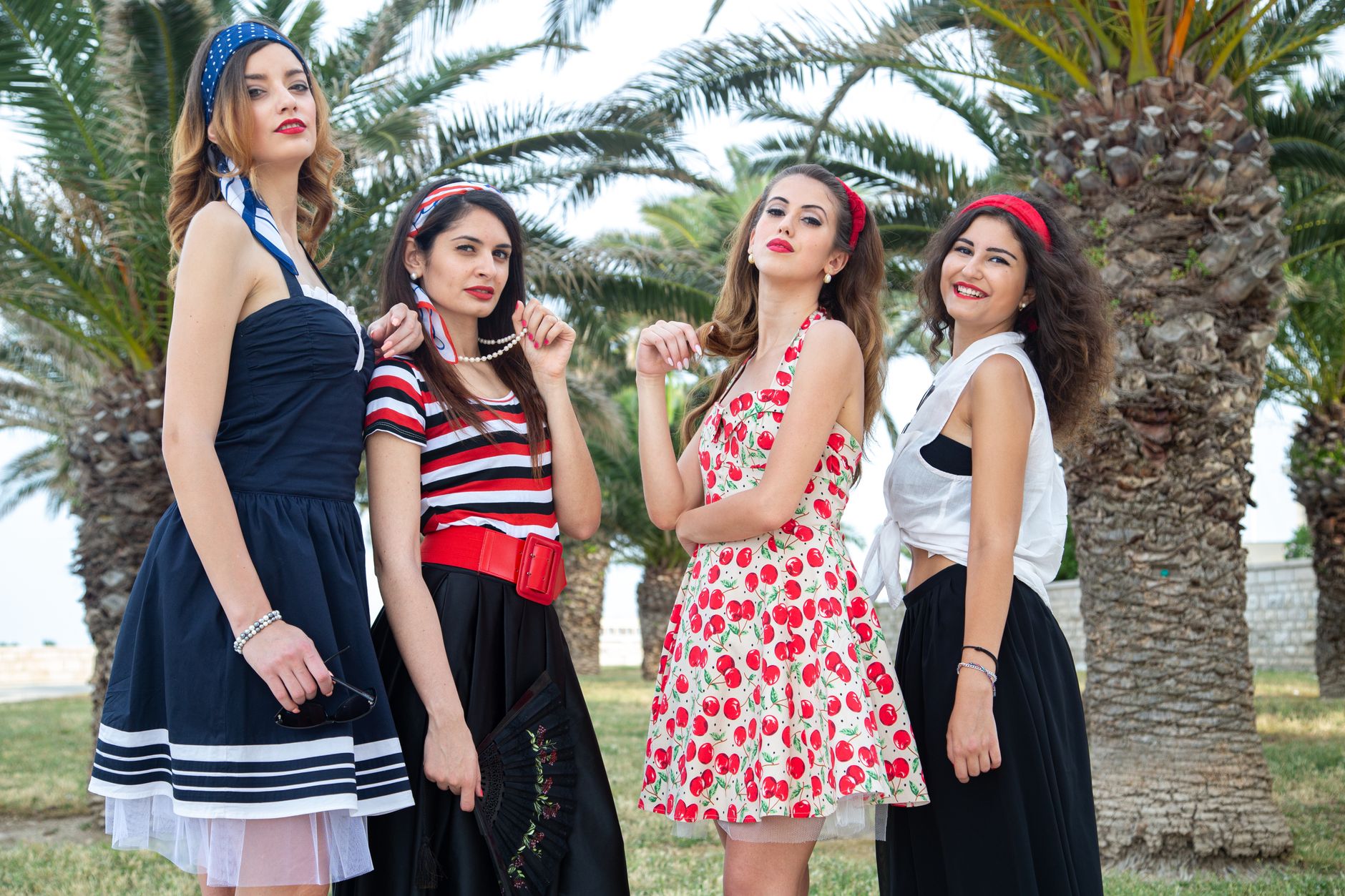
In 1947, Christian Dior launched what editors immediately called the “New Look,” and the reaction was intense. Full skirts, nipped waists, luxurious fabrics: it was the opposite of everything wartime fashion had been. Women who’d spent years in boxy, fabric-rationed clothes responded to it immediately. But it also kicked off a real argument about women’s roles, since the silhouette pushed back toward a domesticated femininity right as many women were reluctant to leave the workforce. Fashion in the 1940s rarely existed outside that tension.
Women’s Changing Fashion Roles
Before the war, most women’s clothing was built around domestic life. Then men left, factories needed workers, and women showed up. Their clothes had to change with them. Trousers became acceptable workwear. Tailored suits became standard. Comfort and function stopped being afterthoughts. And when the war ended, a lot of women simply didn’t want to go back to what they’d been wearing before, which tells you something about how closely clothing tracks the way people actually live.
Military Influence on Style
Military aesthetics moved into everyday wardrobes during the 1940s in a way that felt organic rather than costume-y. Structured shoulders, bomber jackets, and the trench coat all carried that influence. Women adopted elements of uniform dressing partly out of necessity and partly, I think, because it signalled something: competence, resilience, being part of something larger. Fashion in the 1940s used military styling to blur the line between gendered clothing in ways that hadn’t really happened before.
Post-War Fashion Trends
Once rationing eased, fashion swung hard in the other direction. Vibrant colors came back. Fabrics got luxurious again. Dior’s New Look set the tone, but the broader mood was about pleasure and normalcy after years of doing without. Fashion magazines picked up circulation quickly, spotlighting the latest looks and building something close to the celebrity-driven trend cycle we recognize today. It moved fast, and the styles that emerged from 1947 onward really set up what the 1950s would become.
The Lasting Legacy of 1940s Fashion
Fashion in the 1940s left a mark that’s still visible if you know where to look. The decade proved that constraints can push creativity in useful directions, and a lot of what we now call “classic” tailoring traces back to utility-era simplicity. Vintage collectors actively hunt 1940s pieces today, and prices reflect that: basic wartime garments often run $50 to $100, while rarer or designer pieces can climb past $500, sometimes well past. Current designers keep returning to that era for references, which makes sense given how much ground it covered in just ten years.
FAQs
What were popular fabrics in the 1940s?
Wool, cotton, and rayon were the workhorses of wartime fashion. Silk and velvet came back post-war, mainly in higher-end designs.
How did WWII affect women’s fashion?
Rationing forced simpler, more functional styles. Women entering factory work pushed clothing toward practical cuts like trousers and tailored suits.
What styles defined the 1940s?
Utility clothing and military-inspired cuts dominated the war years, then gave way to Dior’s full-skirted New Look once restrictions lifted.